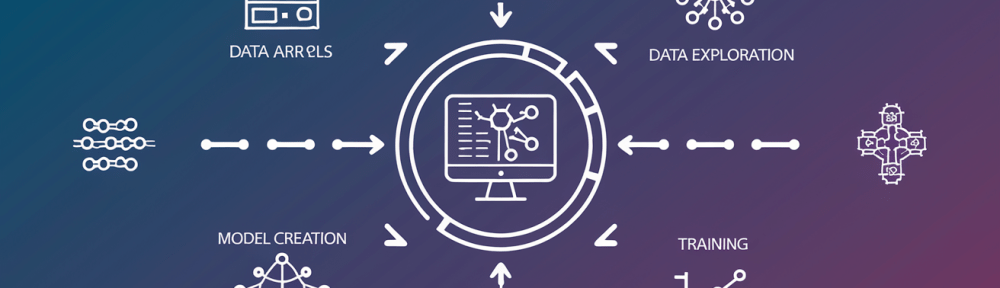
Data science is an interdisciplinary field that involves the scientific study of data to extract knowledge and make informed decisions. It encompasses various roles, including data scientists, analysts, architects, engineers, statisticians, and business analysts, who work together to analyze massive datasets. The demand for data science is growing rapidly as the amount of data increases exponentially, and companies rely more heavily on analytics to drive revenue, innovation, and personalisation. By leveraging data science, businesses and organisations can gain valuable insights to improve customer satisfaction, develop new products, and increase sales, while also tackling some of the world’s most pressing challenges.
Why Azure for Data Science?
You might already be asking: Why pick Azure over other cloud providers? My personal take is that Azure offers a pretty robust ecosystem, especially if your organization already invests heavily in the Microsoft stack. We’re talking native integration with Active Directory, smooth synergy with SQL Server, and direct hooks into tools like Power BI. In short, Azure can streamline a data science operation from data ingestion to final dashboards in a unified environment.
Data Ingestion and Storage
Microsoft Azure provides a comprehensive set of services for data ingestion and storage, enabling organisations to collect, process, and store large volumes of data from various sources. Azure’s data ingestion services allow for the seamless collection of data from on-premises, cloud, and edge devices, while handling issues like data transformation, validation, and routing. Once ingested, data can be stored in a range of Azure storage services, each optimised for specific use cases, such as object storage, big data analytics, and globally distributed databases. By leveraging Azure’s data ingestion and storage services, organisations can build scalable and secure data pipelines that support real-time analytics, machine learning, and business intelligence workloads.
Azure Data Factory (ADF)
Azure Data Factory is a fully managed, cloud-based data integration service that enables seamless data movement, transformation, and orchestration across diverse sources and destinations. It serves as a powerful tool for building scalable ETL (Extract, Transform, Load) and ELT (Extract, Load, Transform) workflows, making it possible to integrate data from on-premises systems, cloud platforms, and SaaS applications. With its user-friendly drag-and-drop interface and robust support for scripting, Azure Data Factory empowers users to design complex data pipelines that can automate data migration, transform raw data into actionable insights, and support advanced analytics. Its integration runtime enables secure hybrid data workflows, and features like Mapping Data Flows allow for code-free transformations. By leveraging ADF, organisations can optimize data processes, reduce engineering complexities, and build a modern, efficient data ecosystem in the cloud.
Azure Event Hubs
Azure Event Hubs is a highly scalable, real-time data ingestion service designed for high-throughput event streaming. It serves as the backbone for collecting and processing massive amounts of data from a wide range of sources, such as IoT devices, applications, sensors, and event producers. With its ability to handle millions of events per second, Azure Event Hubs enables organisations to build robust event-driven architectures and pipelines for real-time analytics, monitoring, and data transformation. It seamlessly integrates with Azure services like Stream Analytics, Data Lake, and Functions, allowing for low-latency processing and storage of ingested data. Its partitioning and checkpointing capabilities ensure scalability and reliability, making it ideal for scenarios like telemetry collection, fraud detection, and user activity tracking. Azure Event Hubs supports multiple protocols and SDKs, including AMQP and Apache Kafka, offering flexibility and ease of integration into existing systems.
Azure IoT Hub
Azure IoT Hub is a fully managed service that acts as a central communication hub between IoT devices and the cloud. It enables secure, reliable, and bi-directional communication, allowing organizations to connect, monitor, and manage billions of IoT devices at scale. With Azure IoT Hub, devices can send telemetry data to the cloud for analysis while also receiving commands and updates from cloud applications. It supports a wide range of IoT protocols such as MQTT, AMQP, and HTTPS, ensuring compatibility with various devices and platforms. Security is a cornerstone of Azure IoT Hub, offering per-device authentication, fine-grained access control, and end-to-end encryption. Additionally, it integrates seamlessly with other Azure services, such as Azure Digital Twins, Stream Analytics, and Machine Learning, to enable advanced analytics, automation, and insights. Azure IoT Hub is a cornerstone for building robust IoT solutions across industries, supporting use cases like predictive maintenance, smart agriculture, and connected vehicles.
Azure Stream Analytics
Azure Stream Analytics is a real-time data processing service designed to analyze and process large streams of data from multiple sources simultaneously. It allows organizations to derive actionable insights from data generated by IoT devices, sensors, applications, social media, and other real-time sources. Using a simple SQL-like query language, users can filter, aggregate, and transform data on the fly without the need for extensive coding or infrastructure setup. The service integrates seamlessly with Azure Event Hubs, IoT Hub, and Azure Blob Storage as input sources, while outputting processed data to destinations such as Power BI, Azure Data Lake, and Azure SQL Database for visualization and further analysis. Azure Stream Analytics is highly scalable, fault-tolerant, and optimised for low-latency processing, making it an ideal solution for scenarios such as monitoring industrial systems, detecting anomalies, analysing clickstreams, and enabling predictive analytics in real time.
Azure Blob Storage
Azure Blob Storage is a highly scalable, durable, and secure cloud storage solution designed to handle unstructured data, such as text, images, video, and backups. Part of the Microsoft Azure Storage suite, it is optimized for storing and retrieving massive amounts of data at high throughput. Blob Storage supports three main tiers—Hot, Cool, and Archive—allowing businesses to optimize storage costs based on data access frequency. Its REST API integration makes it accessible from virtually any platform or application, while features like lifecycle management policies enable automatic data movement across tiers. With enterprise-grade security, encryption, and access controls, Azure Blob Storage is ideal for a wide range of scenarios, from content delivery and analytics to disaster recovery and big data workloads. Its flexibility and cost-efficiency make it a cornerstone for modern cloud-based data solutions.
Azure File Storage
Azure File Storage is a fully managed cloud file storage service designed to provide shared access to files and directories using the SMB (Server Message Block) and NFS (Network File System) protocols. It enables seamless integration with on-premises environments and cloud-based applications, allowing businesses to migrate existing file shares or extend their on-premises storage to the cloud without application modifications. With Azure File Storage, organizations benefit from high scalability, robust security features, and a pay-as-you-go pricing model. It supports features like snapshots for backups, file syncing with Azure File Sync, and hybrid workflows. Azure File Storage is ideal for scenarios such as application configuration, database backups, shared storage for DevOps, and file sharing across distributed teams, providing a reliable, flexible, and secure storage solution for both legacy and modern workloads.
Azure Disk Storage
Azure Disk Storage is a high-performance, durable, and scalable storage solution designed to support virtual machines (VMs) and other compute workloads in the Azure cloud. It provides block-level storage that can be attached to VMs, offering persistent and consistent storage for critical data. Azure Disk Storage comes in several tiers, including Standard HDD, Standard SSD, Premium SSD, and Ultra Disk, allowing users to choose the performance and cost balance that best suits their workloads. With features like automated backups, zone-redundant options, and disaster recovery capabilities, it ensures data availability and durability. It is particularly well-suited for demanding applications such as databases, enterprise applications, and big data analytics, enabling high throughput and low-latency access. Azure Disk Storage simplifies storage management with features like disk snapshots, encryption at rest, and dynamic scalability, making it a powerful choice for a variety of business scenarios.
Azure Table Storage
Azure Table Storage is a highly scalable, fast, and cost-effective NoSQL data storage solution within the Azure cloud ecosystem, designed for storing large amounts of structured, non-relational data. It enables developers to work with key-value pairs and structured entities, making it ideal for applications requiring quick access to large volumes of lightweight, schemaless data. Azure Table Storage is often used for scenarios like storing user profiles, application configurations, event logs, or sensor data for IoT applications. With support for automatic load balancing and geo-redundancy, it ensures high availability and resilience. Its REST-based API and integration with .NET and other development environments make it easy to use across various platforms. Additionally, Azure Table Storage is a cost-efficient option, as you pay only for the storage you use, making it a preferred choice for applications with dynamic or unpredictable data requirements.
Azure Queue Storage
Azure Queue Storage is a cloud-based message queuing service designed to facilitate asynchronous communication between application components, enabling reliable, scalable, and decoupled workflows. It allows developers to store and retrieve messages in a queue, ensuring that messages can be processed independently, even if one component is temporarily unavailable. Each message can be up to 64 KB in size, and a single queue can hold millions of messages, making it ideal for tasks such as background processing, distributed systems, or buffering large volumes of requests. Azure Queue Storage supports simple HTTP/HTTPS-based API access, making it easy to integrate with various applications and programming languages. Additionally, features like message visibility timeouts and poison message handling enhance reliability and control over processing. With its seamless scalability and pay-as-you-go pricing, Azure Queue Storage is a robust solution for handling asynchronous workloads in modern cloud applications.
Azure Data Lake Storage
Azure Data Lake Storage (ADLS) is a highly scalable, secure, and cost-effective cloud-based data storage solution tailored for big data analytics. Built on Azure Blob Storage, ADLS combines the power of a hierarchical file system with enterprise-grade security features to store vast amounts of structured and unstructured data. It is optimized for high-performance analytics workloads, supporting frameworks like Hadoop, Spark, and Azure Synapse Analytics, allowing seamless integration with popular big data tools. ADLS is designed to handle data in various formats, including logs, videos, and telemetry, enabling organizations to centralize data for processing and insights. With features like fine-grained access controls, role-based security, and encryption at rest and in transit, it ensures data protection while meeting compliance requirements. Its scalability allows organisations to store petabytes of data and process it on demand, making Azure Data Lake Storage an essential platform for modern data-driven applications and analytics workflows.
Azure Cosmos DB
Azure Cosmos DB is a globally distributed, multi-model database service designed for modern, scalable applications. It offers seamless scalability, low-latency performance, and guaranteed availability through its fully managed infrastructure. Supporting multiple data models, including document, key-value, graph, and column-family, Azure Cosmos DB is highly versatile and allows developers to interact with data using APIs like SQL, MongoDB, Cassandra, Gremlin, and Table Storage. Its automatic and transparent data replication across multiple Azure regions ensures high availability and disaster recovery. With features like global distribution, multi-model capabilities, elastic scaling, and comprehensive security, Cosmos DB is well-suited for mission-critical applications requiring real-time responsiveness, including IoT, gaming, e-commerce, and financial systems. Its rich querying capabilities and integrated analytics further enable businesses to unlock insights from their data while maintaining enterprise-grade security and compliance.
Azure SQL Database and Managed Instances
Azure SQL Database and Azure SQL Managed Instances are fully managed, cloud-based database services designed to simplify database management while providing high availability, scalability, and security. Azure SQL Database is ideal for applications needing a modern, highly resilient, and elastic database platform. It offers built-in intelligence for performance tuning, scalability with serverless and hyperscale options, and advanced security features such as data encryption, threat detection, and auditing. Azure SQL Managed Instance, on the other hand, provides nearly 100% compatibility with on-premises SQL Server, making it an excellent choice for lifting and shifting existing SQL Server workloads to the cloud with minimal code changes. Both services eliminate the overhead of managing hardware, backups, and patching, allowing businesses to focus on application development and data insights. With support for advanced analytics, seamless integration with Azure services, and automated maintenance, these platforms are tailored for enterprise-scale database needs.
Data Preparation and Exploration
Data preparation and exploration in Azure is a streamlined process enabled by a suite of powerful tools designed to handle raw, unstructured, or semi-structured data and transform it into actionable insights. Azure provides services which help orchestrate data movement and transformation at scale and a collaborative platform for big data analytics and machine learning that simplifies tasks like cleaning, aggregating, and enriching data. For interactive exploration Azure has tools that allow data professionals to query large datasets using familiar SQL interfaces or Spark for advanced analytics.
Azure Synapse Analytics
Azure Synapse Analytics is a powerful, integrated analytics platform designed to unify enterprise data warehousing and big data analytics into a single, cohesive service. It enables organizations to ingest, prepare, manage, and analyze vast volumes of data with unparalleled speed and flexibility. Synapse supports a broad range of data processing scenarios, from SQL-based data warehousing to big data analytics using Spark and other popular frameworks. It provides seamless integration with Azure Data Factory for data ingestion, Power BI for visualization, and Azure Machine Learning for predictive analytics. With its serverless on-demand query capabilities and provisioned resources, users can dynamically scale their compute power based on workload requirements, optimizing both performance and cost. Azure Synapse Analytics is ideal for building end-to-end analytics solutions, enabling businesses to transform raw data into actionable insights with ease and efficiency.
Azure Databricks
Azure Databricks is an advanced analytics platform optimized for big data and artificial intelligence (AI) workloads, built in partnership between Microsoft and Databricks. It provides a unified environment for data engineering, machine learning, and data science, integrating seamlessly with Azure services such as Azure Data Lake, Azure Synapse Analytics, and Power BI. Based on Apache Spark, Azure Databricks simplifies large-scale data processing with distributed computing, enabling users to build, train, and deploy machine learning models efficiently. Its collaborative workspace supports multiple languages, including Python, R, Scala, and SQL, making it accessible to data engineers and data scientists alike. With enterprise-grade security, automated cluster management, and deep integration with Azure Active Directory, Azure Databricks accelerates data-driven innovation, offering scalability, flexibility, and powerful tools to turn raw data into actionable insights.
Model Building and Training
Model building and training in Azure is streamlined through its suite of powerful tools and services designed to support the entire machine learning lifecycle. It provides a collaborative environment for data scientists and developers to preprocess data, build machine learning models, and train them using custom code or automated workflows. For model training, Azure leverages cloud compute resources, such as Azure Machine Learning Compute or Azure Kubernetes Service (AKS), to perform distributed training, significantly reducing training time for large datasets. Azure simplifies the process of training and selecting the best model, enabling faster iterations and improving accessibility for those new to machine learning.
Azure Machine Learning (Azure ML)
Azure Machine Learning (Azure ML) is a comprehensive cloud-based service designed to accelerate the creation, deployment, and management of machine learning models at scale. It provides a fully integrated environment for data scientists, machine learning engineers, and developers to build predictive models and AI solutions. Azure ML supports a wide variety of tools, programming languages, and frameworks, such as Python, R, TensorFlow, PyTorch, and Scikit-learn, enabling flexibility for teams to work with their preferred methods. With features like automated machine learning (AutoML), users can quickly experiment with data to identify the best-performing models without extensive coding, making it accessible even to those with limited expertise. Azure ML also offers pre-built templates and pipelines, simplifying the end-to-end lifecycle of data preparation, model training, validation, and deployment.
What sets Azure ML apart is its focus on operationalising machine learning models. Through seamless integration with other Azure services, such as Azure Synapse Analytics, Azure Data Factory, and Azure Kubernetes Service (AKS), it ensures models can be deployed as REST APIs or integrated into larger data workflows with ease. Azure ML also includes MLOps (Machine Learning Operations) capabilities to monitor, retrain, and manage deployed models effectively, ensuring they remain accurate over time. Its advanced capabilities, such as explainability tools, fairness assessment, and security features, empower organizations to build responsible AI solutions. Whether tackling predictive analytics, recommendation systems, or deep learning projects, Azure ML provides the scalability, reliability, and efficiency to meet the challenges of modern AI-driven applications.
AutoML
Azure AutoML (Automated Machine Learning) is a cutting-edge feature within Azure Machine Learning that simplifies the process of building, training, and deploying machine learning models. It enables users, even with minimal data science expertise, to automatically identify the best algorithms and hyperparameters for a given dataset and prediction task, such as classification, regression, or time series forecasting. AutoML evaluates numerous combinations of algorithms and parameters in a streamlined, iterative manner, leveraging the computational power of Azure to find the most accurate and efficient model. It supports advanced capabilities like feature engineering, automated data pre-processing, and explainability, ensuring users understand the reasoning behind the model’s predictions. With Azure AutoML, organisations can significantly accelerate their machine learning workflows, reduce the manual overhead of experimentation, and deliver high-quality predictive models into production with confidence.
Azure Machine Learning Studio, Notebooks and Programming
Azure Machine Learning Studio is a powerful, web-based integrated development environment (IDE) designed for data scientists and developers to collaboratively build, train, and deploy machine learning models at scale. It provides an intuitive interface that combines drag-and-drop functionality with advanced coding capabilities, making it accessible to both beginners and seasoned professionals. For those who prefer code-first experiences, Azure ML supports Jupyter Notebooks directly within the Studio, allowing users to leverage popular programming languages like Python and R alongside integrated libraries and frameworks such as TensorFlow, PyTorch, and scikit-learn. The environment also supports seamless collaboration, experiment tracking, and version control, enabling teams to work cohesively on shared projects. By combining visual workflows, notebook integrations, and robust programming support, Azure Machine Learning Studio empowers users to accelerate the entire machine learning lifecycle, from data preparation to model deployment, all within a unified platform.
Deployment and Serving
Azure enables organisations to operationalise machine learning models efficiently by providing tools and platforms to deploy, host, and serve predictions at scale. Azure offers robust services like Azure Machine Learning Endpoints, Azure Kubernetes Service (AKS), and Azure Container Instances (ACI) to handle the complexities of deploying models in production environments. With Azure ML, data scientists can deploy models as RESTful APIs, making them accessible to applications, workflows, or business systems. These services support seamless scaling, version control, and integration with CI/CD pipelines to ensure continuous delivery and updates.
Azure Container Instances / Azure Kubernetes Service (AKS)
Azure Container Instances (ACI) and Azure Kubernetes Service (AKS) are vital tools for deploying, managing, and scaling containerized applications, making them particularly valuable for data science and machine learning workflows. ACI provides a lightweight, serverless platform for quickly running Docker containers without managing complex infrastructure. This is ideal for ad-hoc tasks like testing machine learning models, running data preprocessing scripts, or deploying lightweight applications. ACI supports seamless integration with Azure Machine Learning and other Azure services, allowing data scientists to deploy models as REST endpoints or batch processing tasks with minimal setup. Its on-demand nature and cost efficiency make it perfect for prototyping and experimenting with containerized machine learning workflows.
For more robust and production-scale workloads, Azure Kubernetes Service (AKS) offers a managed Kubernetes platform to orchestrate and scale containerised applications. AKS is well-suited for deploying large-scale machine learning models, running distributed training across GPUs, or managing complex machine learning pipelines. With AKS, data scientists can utilize advanced features like auto-scaling, rolling updates, and integration with Azure DevOps for continuous deployment. The service also supports integration with popular tools like MLflow and Kubeflow, enabling efficient model tracking, deployment, and monitoring. By leveraging AKS, organisations can ensure reliability, scalability, and performance for machine learning and data science workloads, making it a cornerstone for building enterprise-grade AI solutions in Azure.
Azure ML Endpoints
Azure Machine Learning Endpoints are a powerful feature designed to simplify the deployment and management of machine learning models as scalable, real-time or batch inference services. Endpoints allow data scientists and developers to deploy trained models with minimal effort, providing a REST API interface that enables easy integration with applications, workflows, or other systems. With Azure ML, you can create managed online endpoints for low-latency predictions or batch endpoints for processing large datasets asynchronously. These endpoints support versioning, which allows you to manage multiple model versions and perform A/B testing to optimize performance. Azure ML also provides built-in monitoring and logging tools to track endpoint performance, detect anomalies, and ensure reliability. By automating key aspects of deployment and scaling, Azure ML Endpoints empower organisations to operationalise AI solutions efficiently, making them accessible and performant in production environments.
Monitoring, Management, MLOps and Versioning
Monitoring, management, MLOps, and versioning in Azure for data science provide the essential framework for maintaining and optimizing machine learning models in production. Azure Machine Learning integrates seamlessly with tools like Azure Monitor, Application Insights, and Log Analytics to enable real-time monitoring of model performance, resource utilization, and operational metrics. This ensures that organizations can detect and resolve anomalies, such as drift in model accuracy or unexpected spikes in latency. Monitoring tools also allow the implementation of automated alerting systems, ensuring that any issues with deployed models are addressed promptly to maintain reliability and accuracy in production.
MLOps in Azure is a powerful paradigm that combines DevOps practices with machine learning workflows, enabling seamless collaboration between data scientists, engineers, and operations teams. Azure provides tools for managing the lifecycle of machine learning models, including dataset versioning, model versioning, and tracking experiment metadata. Features like Azure DevOps and GitHub Actions can be integrated to automate pipelines for training, testing, and deployment, ensuring consistent delivery and updates of machine learning models. Azure ML’s versioning capabilities keep a detailed history of datasets, code, and model artifacts, allowing teams to reproduce experiments and roll back to previous versions if needed. Together, these capabilities ensure operational efficiency, model transparency, and scalability, making Azure a robust platform for managing enterprise-scale machine learning projects.
Pro Tip: Combine Azure DevOps or GitHub Actions with Azure ML’s Model Registry for a full loop—new data triggers retraining, best model is auto-deployed, and everything is version-controlled.
Integrations and Reporting
Integration and reporting in Azure for data science empower organizations to seamlessly connect various tools, services, and data sources to drive actionable insights. Azure offers an extensive ecosystem of integration options, allowing data scientists to ingest, process, and analyze data from diverse sources such as Azure Data Lake, Azure Blob Storage, Azure SQL Database, and external systems. With Azure Data Factory, teams can orchestrate complex workflows, bringing together disparate datasets into unified pipelines for analysis. Additionally, Azure Logic Apps and Power Automate enable the automation of data flows and decision-making processes, bridging the gap between data science models and operational systems. These integrations ensure that data science workflows can leverage the full breadth of enterprise data and align with business objectives.
Azure’s reporting capabilities are bolstered by its integration with Power BI, a powerful business intelligence tool that transforms raw data and model outputs into interactive and visually compelling dashboards. Data scientists can use Power BI to share machine learning predictions, model performance metrics, and insights with business stakeholders, enabling data-driven decision-making at every level of the organization. Azure Machine Learning integrates natively with Power BI, allowing seamless embedding of model insights and predictions directly into reports. This tight coupling between machine learning outputs and business intelligence ensures that insights are not just created but also communicated effectively to drive real-world impact. With these capabilities, Azure bridges the gap between technical data science teams and decision-makers, ensuring alignment and value creation.
Strategies, Recommendations and Best Practices
Data science projects in Azure should adopt a well-structured approach, leveraging the various tools and services available in the ecosystem. Establishing a clear workflow—starting from data ingestion and preparation to model development, deployment, and monitoring—is critical. Azure’s integration capabilities allow seamless connections between services like Azure Data Lake, Azure Databricks, and Azure Machine Learning, ensuring a unified pipeline for handling large-scale data and iterative model development.
A key recommendation is to adopt Azure Machine Learning’s workspace for organizing data science projects. Workspaces enable centralized management of datasets, experiments, models, and deployment endpoints, streamlining collaboration across teams. When dealing with large datasets, Azure Synapse Analytics or Azure Data Lake Storage can be used for efficient storage and querying. For data preparation, combining Azure Data Factory for ETL processes and Azure Databricks for data exploration ensures both efficiency and flexibility. Utilizing version control for datasets, notebooks, and machine learning models, whether through Git integration or Azure ML’s in-built capabilities, ensures reproducibility and traceability, which are vital for robust data science workflows.
Another best practice is to prioritize scalability and cost-efficiency in model training and deployment. Leveraging Azure’s cloud-native capabilities, such as spot virtual machines or Azure Kubernetes Service (AKS), can help scale resources dynamically while keeping costs under control. AutoML can be employed to accelerate experimentation and model selection, especially for classification, regression, or forecasting problems, enabling data scientists to focus on refining features and interpreting results. Furthermore, adopting containerized deployments via Azure Container Instances or AKS ensures consistent and scalable serving of models across environments, minimizing operational challenges.
From a governance and security perspective, implementing role-based access control (RBAC), monitoring Azure Key Vault for managing secrets, and encrypting sensitive data at rest and in transit are critical best practices. Leveraging Azure Monitor and Application Insights helps maintain visibility into model performance, API usage, and potential bottlenecks in the production environment. For operationalizing data science workflows, integrating Azure DevOps or GitHub Actions for MLOps ensures continuous integration and continuous delivery (CI/CD) pipelines are in place, automating the testing, deployment, and rollback of models when required.
Lastly, embracing collaboration and cross-team integration is crucial. Azure facilitates this through shared workspaces, interactive Jupyter notebooks, and integration with Power BI for reporting. Ensuring that data scientists, engineers, and business stakeholders are aligned through regular checkpoints and dashboards improves the impact and relevance of data science projects. By following these strategies and best practices, organizations can harness the full potential of Azure for building scalable, secure, and efficient data science solutions that drive meaningful business outcomes.
 Professional Developer