-
The Rise of “Vibe Coding” and Intuitive Software Development

The world of software development is being reshaped by a new, more intuitive approach: “vibe coding.” This method, fueled by advancements in artificial intelligence, is moving the focus from writing syntactically perfect code to expressing the desired outcome in natural language. This deep-dive article explores the essence of vibe coding, spotlights the pioneering tools enabling this shift, and provides a framework for its integration across the entire Software Development Life Cycle (SDLC). Deconstructing the “Vibe”: What is Vibe Coding? At its core, vibe coding is a development practice where a human developer collaborates with an AI-powered coding assistant to generate,… Go to Post
-
Too many llamas? Running AI locally

In the rapidly evolving landscape of artificial intelligence, understanding the distinctions between various tools and models is crucial for developers and researchers. This blog post aims to elucidate the differences between the LLaMA model, llama.cpp, and Ollama. While the LLaMA model serves as the foundational large language model developed by Meta, llama.cpp is an open-source C++ implementation designed to run LLaMA efficiently on local hardware. Building upon llama.cpp, Ollama offers a user-friendly interface with additional optimizations and features. By exploring these distinctions, readers will gain insights into selecting the appropriate tool for their AI applications. What is the LLaMA Model? LLaMA (Large Language Model Meta AI) is… Go to Post
-
Understanding Vector Databases in the Modern Data Landscape
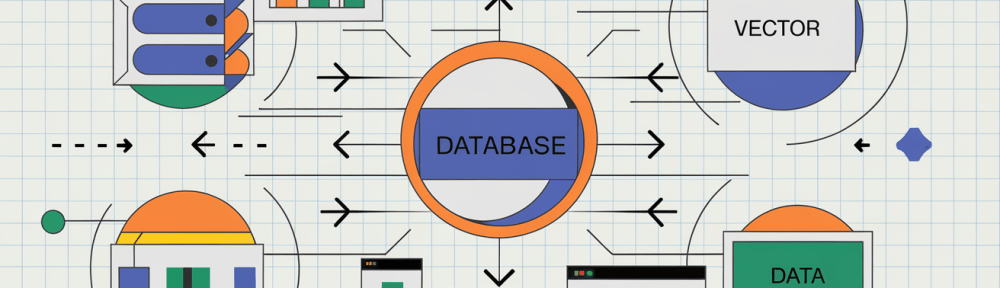
In the ever-expanding cosmos of data management, relational databases once held the status of celestial bodies—structured, predictable, and elegant in their ordered revolutions around SQL queries. Then came the meteoric rise of NoSQL databases, breaking free from rigid schemas like rebellious planets charting eccentric orbits. And now, we find ourselves grappling with a new cosmic phenomenon: vector databases—databases designed to handle data not in neatly ordered rows and columns, nor in flexible JSON-like blobs, but as multidimensional points floating in abstract mathematical spaces. At first glance, the term vector database may sound like something conjured up by a caffeinated data scientist at 2… Go to Post
-
Refactoring with GitHub Copilot: A Developer’s Perspective

Refactoring is like tidying up your workspace — it’s not glamorous, but it makes everything easier to work with. It’s the art of changing your code without altering its behavior, focusing purely on making it cleaner, more maintainable, and easier for developers (current and future) to understand. And in this day and age, we have a nifty assistant to make this process smoother: GitHub Copilot. In this post, I’ll walk you through how GitHub Copilot can assist with refactoring, using a few straightforward examples in JavaScript. Whether you’re consolidating redundant code, simplifying complex logic, or breaking apart monolithic functions, Copilot can… Go to Post
-
Unlocking the Art of Prompting, Output Refinement and Creative Collaboration with Generative AI
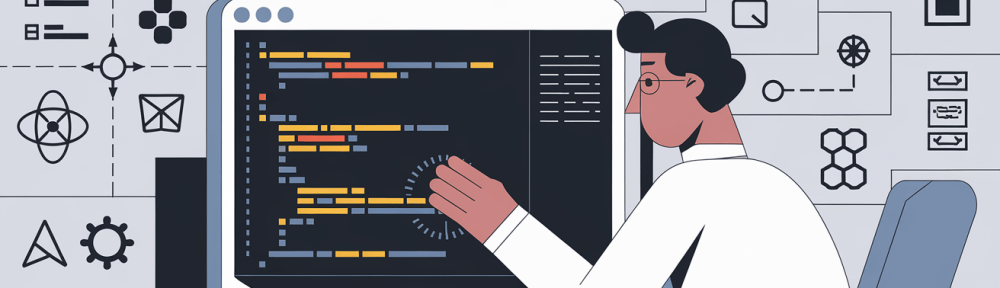
To excel in crafting prompts for generative AI tools like ChatGPT, Claude, or Perplexity, you need to fundamentally shift your understanding of the interaction. While it might feel like you’re engaging in a conversation with an intelligent entity, what’s really happening is far more mechanical and mathematical. These tools are not conscious or sentient but are instead advanced predictive engines. Your prompts are not queries in the traditional sense—they are patterns that guide the AI to predict the next sequence of letters, spaces, or even conceptual elements in its output. The illusion of conversation, intelligence, and creativity is a result… Go to Post
-
Harnessing Data Science in Microsoft Azure: A Practical Guide to Tools, Workflows, and Best Practices
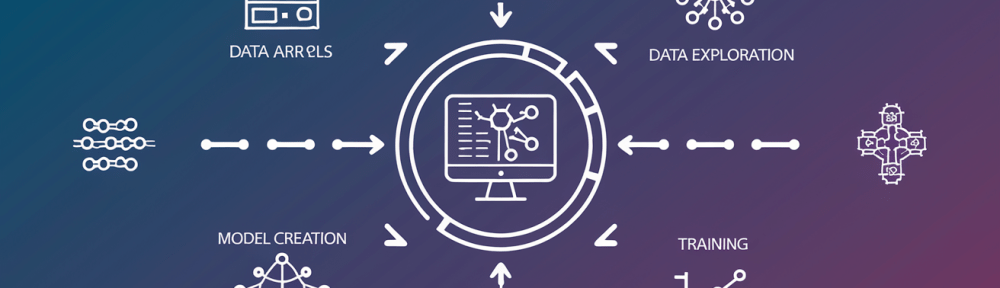
Data science is an interdisciplinary field that involves the scientific study of data to extract knowledge and make informed decisions. It encompasses various roles, including data scientists, analysts, architects, engineers, statisticians, and business analysts, who work together to analyze massive datasets. The demand for data science is growing rapidly as the amount of data increases exponentially, and companies rely more heavily on analytics to drive revenue, innovation, and personalisation. By leveraging data science, businesses and organisations can gain valuable insights to improve customer satisfaction, develop new products, and increase sales, while also tackling some of the world’s most pressing challenges.… Go to Post
-
Unraveling the Data Science, Machine Learning, AI, and Generative AI terminology: A Practical, No-Nonsense Guide
We often hear the buzzwords—Data Science, Machine Learning, AI, Generative AI—used interchangeably. Yet each one addresses a different aspect of how we handle, analyze, and leverage data. Whether you’re aiming to build predictive models, generate human-like text, or glean insights to drive business decisions, understanding the core concepts can be transformative. My goal here is to draw clear lines between these often-overlapping fields, helping us see how each fits into the bigger picture of turning data into something genuinely impactful. This is a vast and deep field… we’ll just scratch the surface. Data Science: The Foundation and Bedrock Data Science encompasses… Go to Post
Professional Developer
by Rodrigo Silva

 Professional Developer