-
The Rise of “Vibe Coding” and Intuitive Software Development

The world of software development is being reshaped by a new, more intuitive approach: “vibe coding.” This method, fueled by advancements in artificial intelligence, is moving the focus from writing syntactically perfect code to expressing the desired outcome in natural language. This deep-dive article explores the essence of vibe coding, spotlights the pioneering tools enabling this shift, and provides a framework for its integration across the entire Software Development Life Cycle (SDLC). Deconstructing the “Vibe”: What is Vibe Coding? At its core, vibe coding is a development practice where a human developer collaborates with an AI-powered coding assistant to generate,… Go to Post
-
Refactoring with GitHub Copilot: A Developer’s Perspective
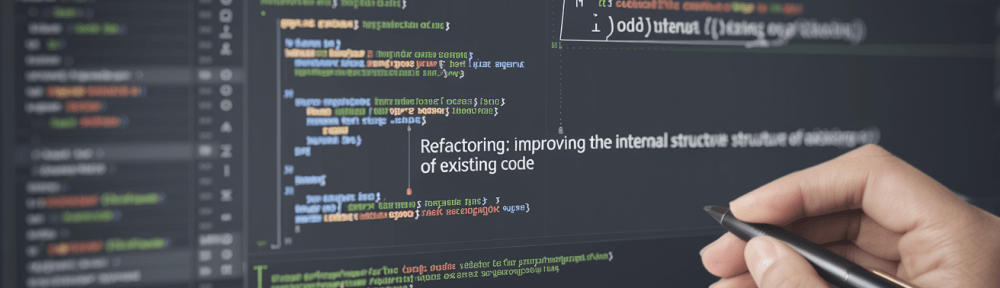
Refactoring is like tidying up your workspace — it’s not glamorous, but it makes everything easier to work with. It’s the art of changing your code without altering its behavior, focusing purely on making it cleaner, more maintainable, and easier for developers (current and future) to understand. And in this day and age, we have a nifty assistant to make this process smoother: GitHub Copilot. In this post, I’ll walk you through how GitHub Copilot can assist with refactoring, using a few straightforward examples in JavaScript. Whether you’re consolidating redundant code, simplifying complex logic, or breaking apart monolithic functions, Copilot can… Go to Post
-
Decoding Big O: Analysing Time and Space Complexity with Examples in C#, JavaScript, and Python
Efficiency matters. Whether you’re optimising a search algorithm, crafting a game engine, or designing a web application, understanding Big O notation is the key to writing scalable, performant code. Big O analysis helps you quantify how your code behaves as the size of the input grows, both in terms of time and space (meaning memory usage). Big O notation was introduced by German mathematician Paul Bachmann in the late 19th century and later popularised by Edmund Landau. It was originally part of number theory and later adopted into computer science for algorithm analysis. Big O notation gets its name from the letter “O,” which stands… Go to Post
Professional Developer
by Rodrigo Silva

 Professional Developer